
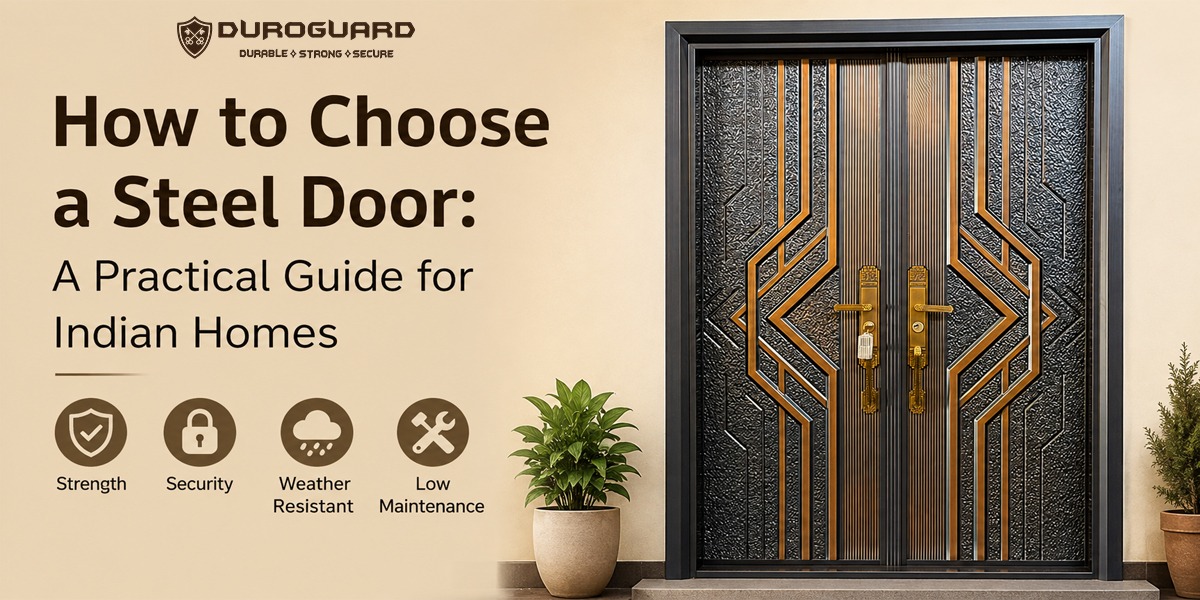
How to Choose a Steel Door: A Practical Guide for Indian Homes
Why Steel at the Entrance
- No warping — doesn't swell in monsoon or shrink in summer
- Termite-proof — nothing to eat
- Secure — galvanised leaf + multi-point lock is a different obstacle entirely
- Fire resistant — steel doesn't feed a fire
- Looks like wood — heat-transfer finishes fool most visitors
The 8 Things That Actually Matter
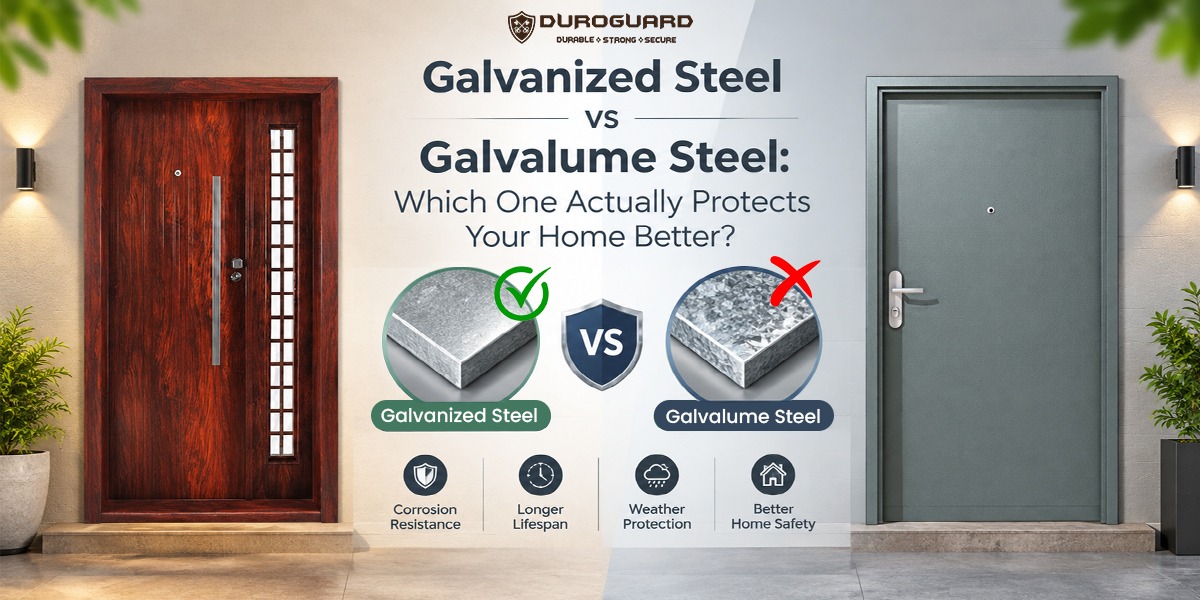
1. Steel type. Ask: GI, CRCA, or ZAM? CRCA is bare steel with no rust protection. GI (galvanised) is the minimum for metal doors for entrance use. Coastal homes — insist on it. If the seller can't answer, that's your answer.
2. Sheet thickness. Not door thickness — the metal skin.
| Thickness | Gauge | Use |
|---|---|---|
| 0.6–0.7 mm | 24–22 | Budget / internal |
| 0.8–0.9 mm | 22–20 | Good main door |
| 1.0–1.2 mm | 20–18 | Premium, high security |
Press the centre of the leaf. A quality door barely flexes.
3. Core. Hollow = cheap and loud. Honeycomb = good balance. Rockwool or PU = best insulation. Knock it — solid thud, not tinny echo.
4. Frame. Burglars break frames, not doors. Demand a galvanised steel frame, 3+ heavy-duty hinges, masonry anchoring, and a rubber gasket for dust and rain.
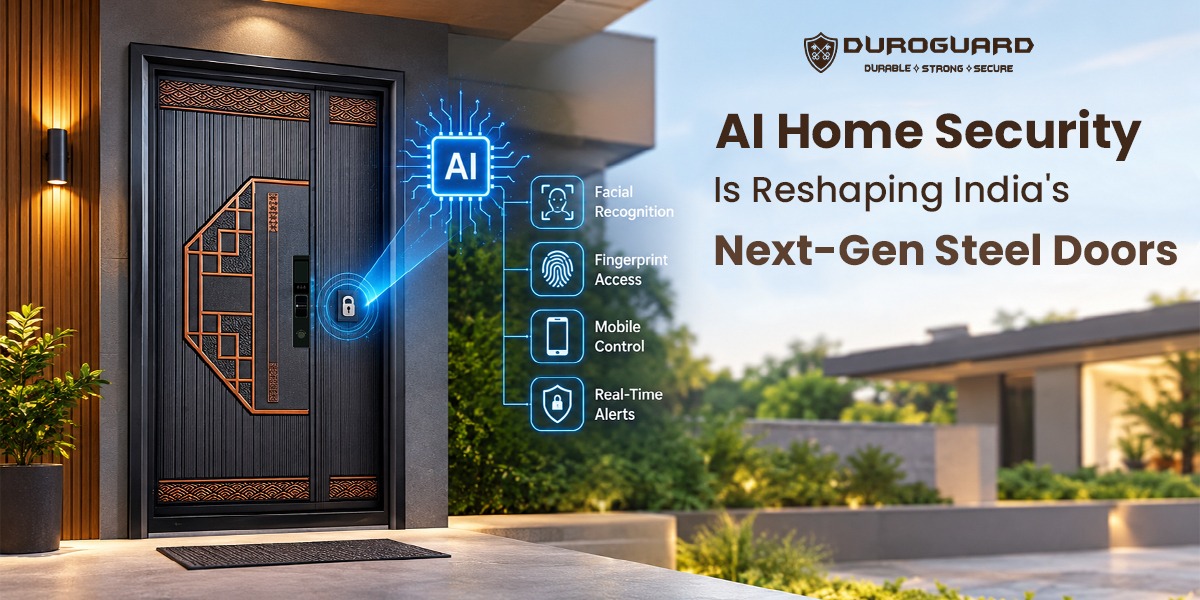
5. Lock. An expensive door with a cheap lock is a cheap door. Look for multi-point locking, non-duplicable keys, anti-drill cylinder, and digital-lock readiness. Ask the brand name — a confident seller names it.
6. Finish. Powder coat + heat-transfer wood grain is standard. The question that matters: is the top coat UV protected, and is fading covered by warranty? Most warranties quietly exclude it.
7. Size. Measure the finished opening — after flooring and plaster. Decide swing direction. Good manufacturers make custom sizes. If a seller says "adjust the wall," walk away.
8. Warranty + installation + service. Check structure, finish, and hardware separately. Confirm a brand-trained installer, not a random carpenter. And confirm someone in your city will show up in year four.
Steel is the right call at the entrance. For internal doors for home use — bedrooms, bathrooms — WPC and engineered options usually make more sense.
At the Door Showroom: 6 Things to Do
- Open and close it ten times — listen for scraping or sag
- Press the leaf centre — check flex
- Knock it — hollow or solid?
- Check edges and welds — clean seams, no burrs
- Turn the key — smooth, not gritty
- Get specs in writing: steel type, thickness, core, lock brand, warranty
Spotting the Best Door Shops
Good signs: Authorized dealer (not reseller), installed references nearby, quotes specs not just price, handles installation and service, written warranty.
Walk away from: "steel is steel, all same" · no answer on gauge or coating · book-today pressure · quotes that leave out frame, hardware or installation and pad them in later.
Checklist — Screenshot This
- Galvanised (GI) or ZAM, in writing
- 0.8 mm+ sheet thickness
- Filled core
- Galvanised frame, 3+ hinges
- Multi-point lock, restricted keys
- UV-protected finish with warranty
- Weather gasket
- Custom size available
- Brand-trained installation
- Written warranty — structure, finish, hardware
- Local service you can call
All eleven ticked? You're looking at one of the best steel doors in your budget.
Conclusion
Four things decide a steel door: the metal, the core, the frame, the lock. Get those right and design is just taste.
Duroguard builds India's trusted steel doors — galvanised steel, honeycomb panels, multi-point locking, wood-finish designs. 15,000+ homes, showrooms across South India.
Frequently Asked Questions
Everything you need to know about this topic

Comments