
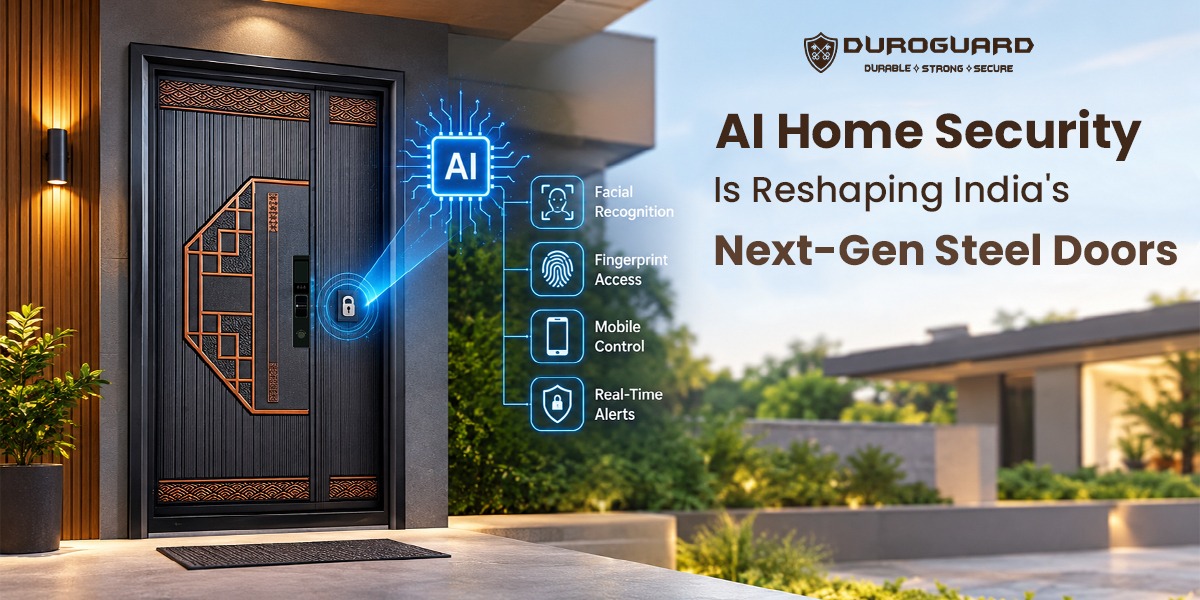
AI Home Security Is Reshaping India's Next-Gen Steel Doors
AI-Driven Home Security Is Influencing the Next Generation of Steel Doors
In former days the front door had only one function: to remain closed. Nowadays it can be unlocked with a fingerprint, will let you know who rang the bell when you were at work, and will send you a message on your phone if it remains open for too long. It is because of this change that the best steel doors in India no longer look or work as those which were sold five years ago.
In short, the use of artificial intelligence in home security is causing manufacturers of steel doors to design their doors so as to incorporate technology rather than merely providing hardware. This involves creating reinforced lock cavities for use with digital locks, including hidden channels for cameras and sensors, achieving tighter frame tolerances in order that the sensors may function correctly, and using finishes that can withstand everyday use of smart locks.
What AI Actually Changed at the Entrance
The old security was merely passive—there was just a lock, a latch, perhaps a chain—and you only realized that a break-in had taken place after it had occurred.
AI-based systems are currently active. Cameras that have recognition capabilities on board can distinguish between a delivery person and somebody who is just loitering. The motion sensors pick up on the routine of your household and identify anything that doesn't fit within it. Also, the locks record each entry together with a timestamp.
The hardware must be placed somewhere, and in this case it is on the door; however, a door designed only for a simple mortise lock is not well suited to carry it.
Five Ways Smart Security Is Reshaping Steel Door Design
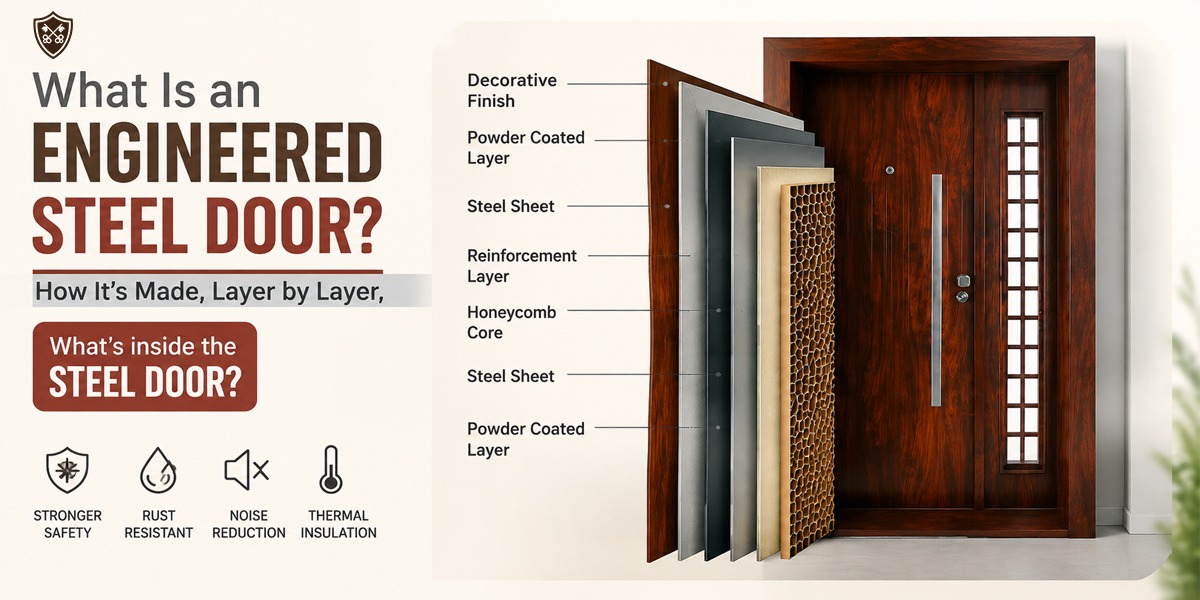
1. The locks have changed from mechanical to digital ones; digital locks require a more deeply cut cavity and a stiffer shutter around it. If you cut that pocket into a thin, hollow door then the panel will flex each time the handle is pushed. Steel doors fitted with internal reinforcement keep the lock body rigid for many years.
2. The frames became important for sensing purposes. The door sensors function based on a magnetic gap of a few millimetres; if the door warps in the summer or sags at its hinges false alarms will occur at 2 AM. Nowadays, consistent alignment of the frame is a security feature rather than merely a finishing touch.
The wiring was inserted into the door; video door phones, smart peepholes and motion detectors need to be powered. Modern metal doors used at entrances are now having concealed conduits incorporated in them so that nothing dangles from the surface and can be cut from the outside.
4. Surfaces need to make contact every day since smart locks require fingers, palms and phones to touch the same area several times a day; therefore powder-coated and heat-transfer finishes are now being specified in order to provide resistance to scratches and smudges in the lock area.
5. The door became an integral part of a system, so that homeowners now expect the door, the camera, the alarm and the app to be able to communicate with one another; doors are being selected nowadays more for the equipment that can be fitted into them than for the thickness of the steel.
Frequently Asked Questions
Everything you need to know about this topic

Comments