
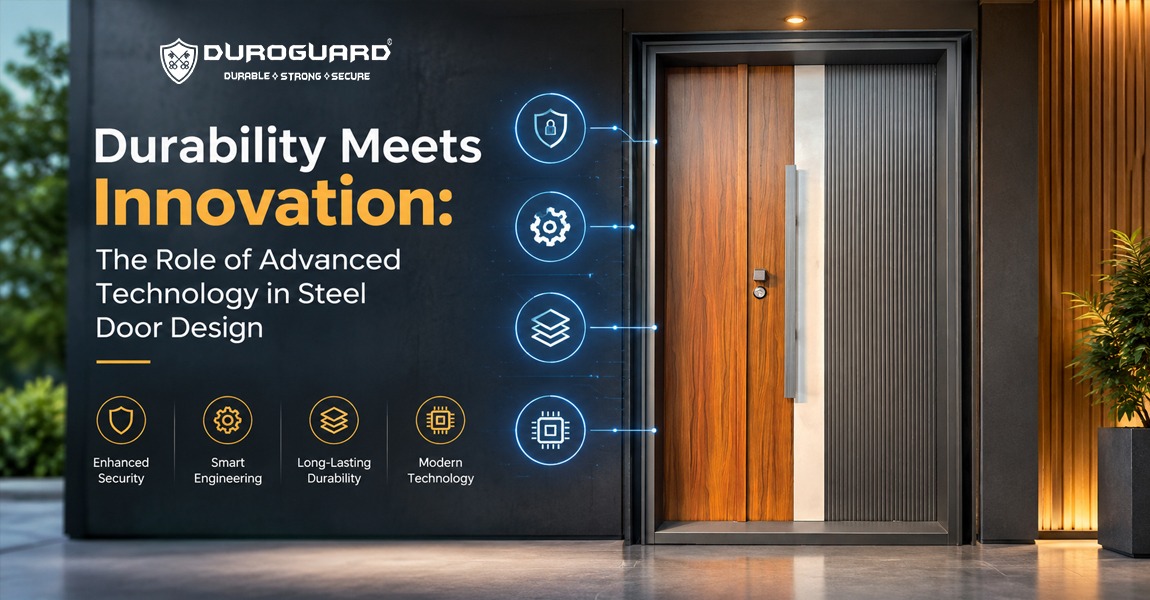
Durability Meets Innovation: The Role of Advanced Technology in Steel Door Design
A few years ago, "steel door" meant one thing in most Indian homes. A heavy grey sheet, a basic lock, and a look that belonged more on a godown than a living room.That picture is outdated now.
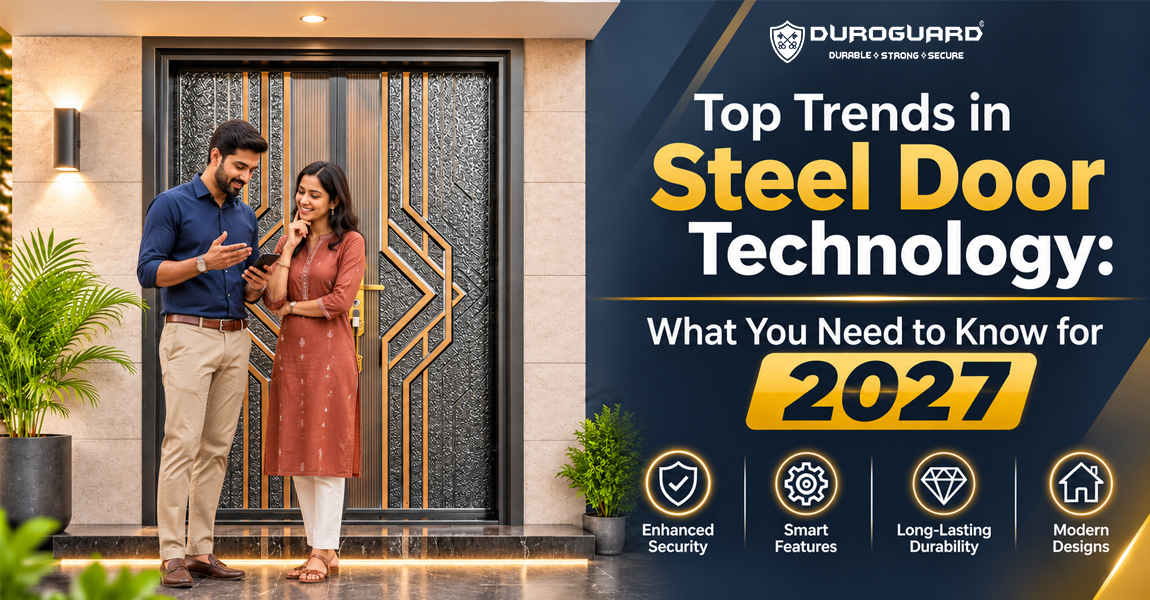
Today's steel door design borrows from the same technology used in cars and appliances. Laser cutting, robotic welding, galvanised sheets, insulated cores and app-controlled locks. The result is a door that looks like premium wood but behaves like a safe.
Quick answer: Advanced technology improves steel doors in four ways. Precision manufacturing makes them stronger and better fitted. Galvanising and powder coating stop rust. Insulated cores and multi-point locks add safety and comfort. Digital wood-grain finishes make them look as good as timber, without termites, warping or polishing.
Let's break down what actually goes into a modern steel door, and what you should look for before you buy one.
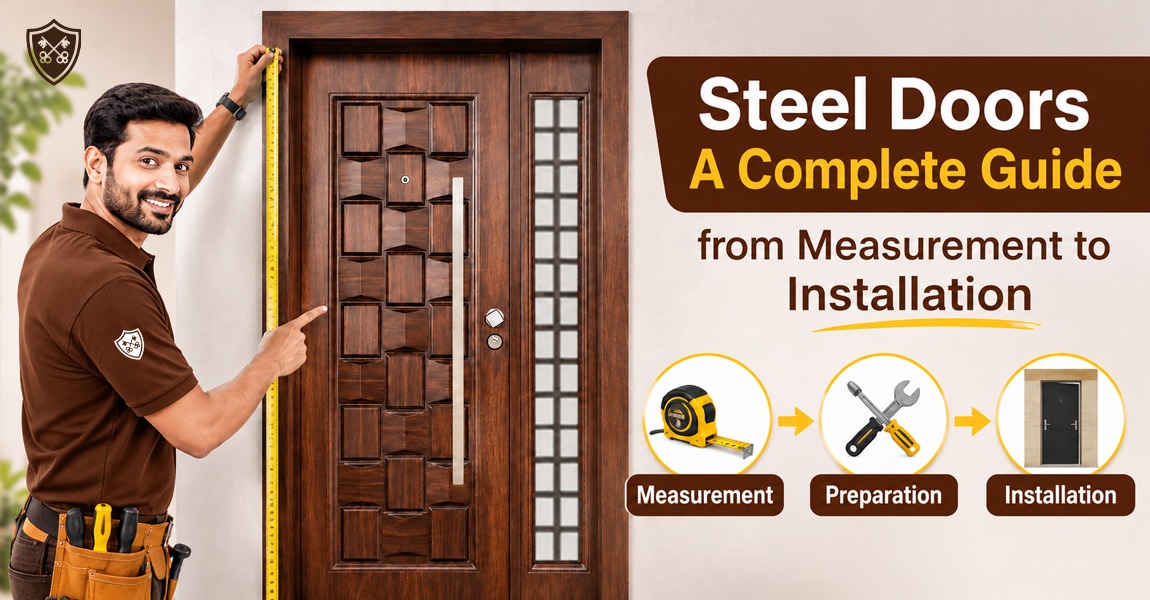
1. Precision Manufacturing: Laser, CNC and Robotic Welding
Strength starts on the factory floor, not in the showroom.
Walk into a good door factory today and you'll notice how little is done by hand. That's a good thing.
- Laser cutting: Cuts steel to a fraction of a millimetre. Panels sit flush with the frame, with no wavy edges.
- CNC press bending: Every fold is bent at the same angle, door after door. No gaps for dust, rainwater or a crowbar.
- Robotic welding: Joints come out uniform and fully fused. A tired welder at 6 pm can miss a spot. A robot doesn't.
- Embossing presses: Panel patterns are pressed into the steel, which also makes the sheet stiffer.
Important: Ask about sheet thickness. A thicker steel skin resists dents and forced entry far better, and two doors that look identical can differ a lot here.
Why it matters to you: The door shuts smoothly, seals tight and won't sag after three monsoons.
2. Corrosion Protection Built for Indian Weather
Rust is the first thing every buyer asks about. Fair question.
If you live in Kochi, Chennai, Mangaluru or Goa, salty air eats cheap metal fast. Even inland, one heavy monsoon can do damage. Good steel doors fight back in layers.
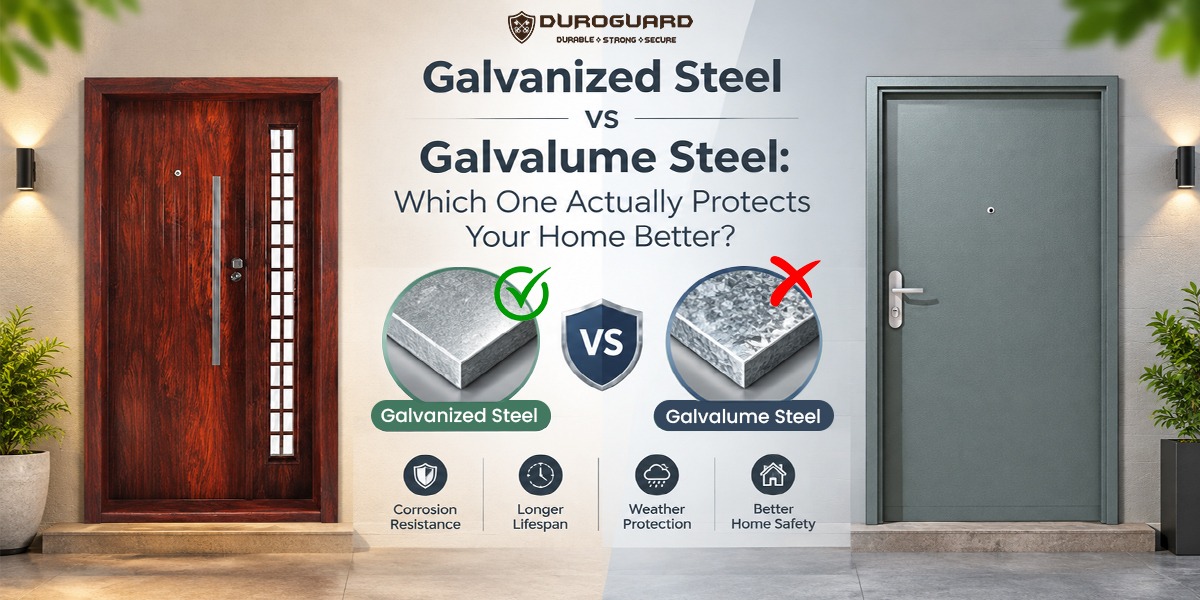
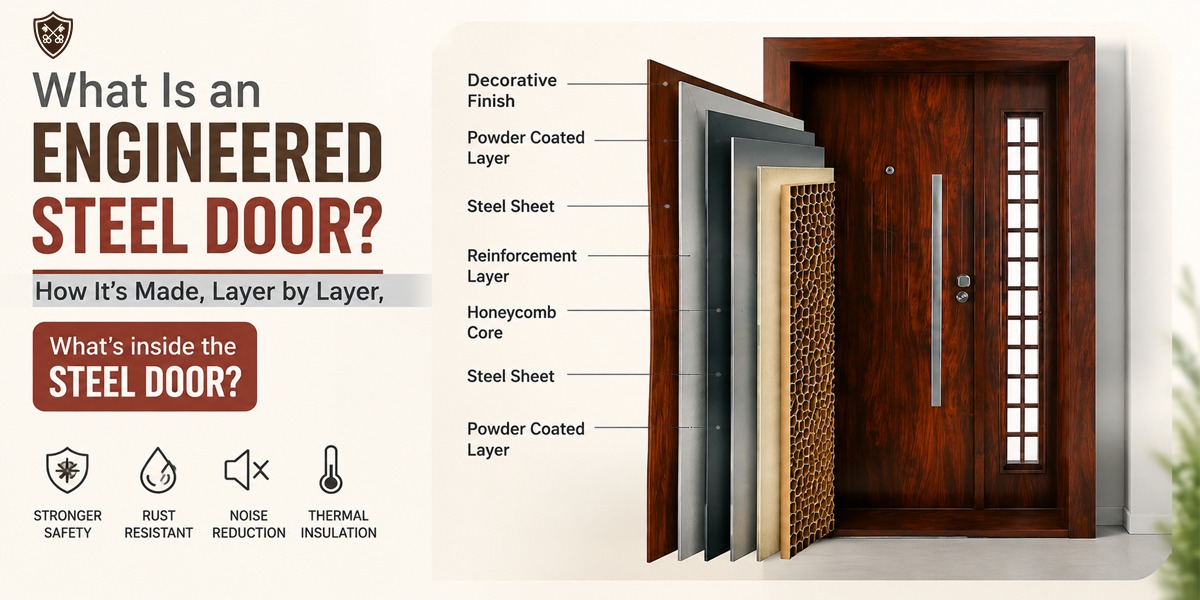
- Galvanised steel (GI/GP sheet): A zinc layer sits between the steel and the air. Even if the surface gets scratched, the zinc keeps protecting it.
- Multi-stage pre-treatment: The sheet is degreased, cleaned and phosphated so the coating actually grips.
- Electrostatic powder coating: The powder is charged, sprayed and baked on. It covers edges and corners evenly, which is exactly where normal paint fails first.
- UV-stable top coat: Keeps the colour from fading on a sun-facing entrance.
Important: Ask for the zinc coating weight (in GSM) and the salt spray test result. These two numbers tell you more about rust life than any brochure photo.
Why it matters to you: A wipe with a damp cloth is all the maintenance most owners ever do.
3. What's Inside Counts: Core, Frame and Hardware
You can't see it from outside, but this is where a cheap door and a good door part ways.
- Honeycomb or PUF core: Fills the hollow inside the shutter. The door gets more rigid, quieter and better at keeping heat out.
- Rock wool core: Used in fire-rated doors for apartments and commercial buildings.
- Reinforced steel frame: Stops the door from flexing when someone tries to pry it open.
- EPDM rubber gaskets: Seal the edges against dust, rain, insects and street noise.
- Ball-bearing hinges with anti-lift pins : Smooth swing, and the door can't be lifted off its hinges from outside.
Important: Knock on the shutter at the showroom. A hollow, tinny sound usually means a weak or empty core.
And yes, steel is naturally a termite-proof door material. Nothing to eat, nothing to swell, nothing to crack.
4. Multi-Point Locking and Smart Security
Most break-ins go after the lock, so that's where the serious engineering goes.
- Multi-point locking: One turn of the key throws bolts into the frame at several points. The force is spread out instead of landing on one latch.
- High-security cylinders: Anti-pick, anti-drill and anti-snap designs make tampering slow and noisy.
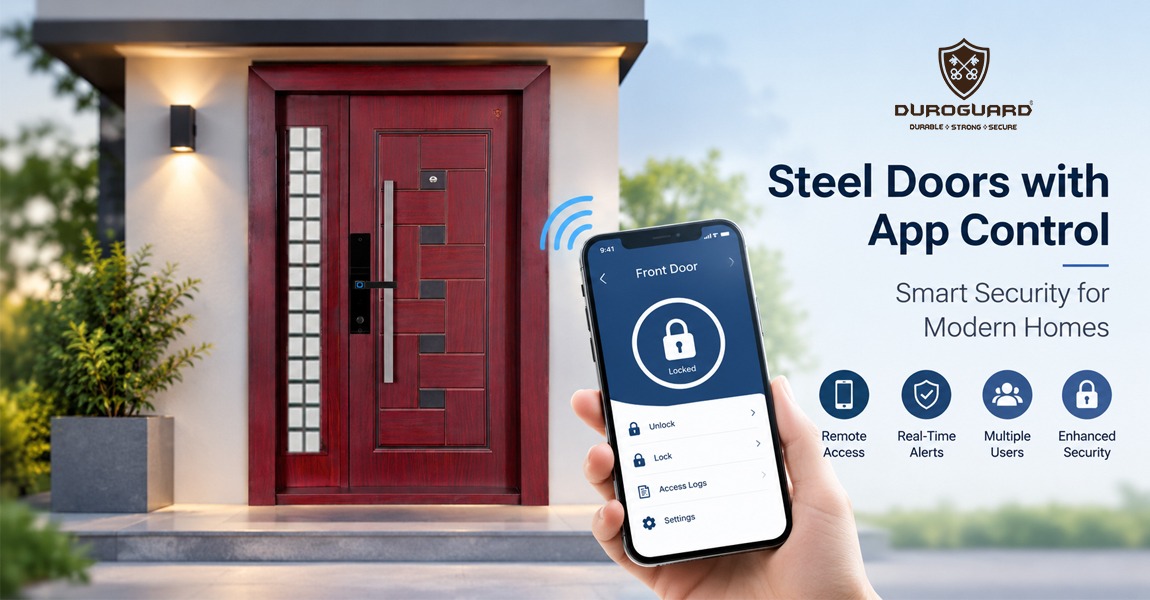
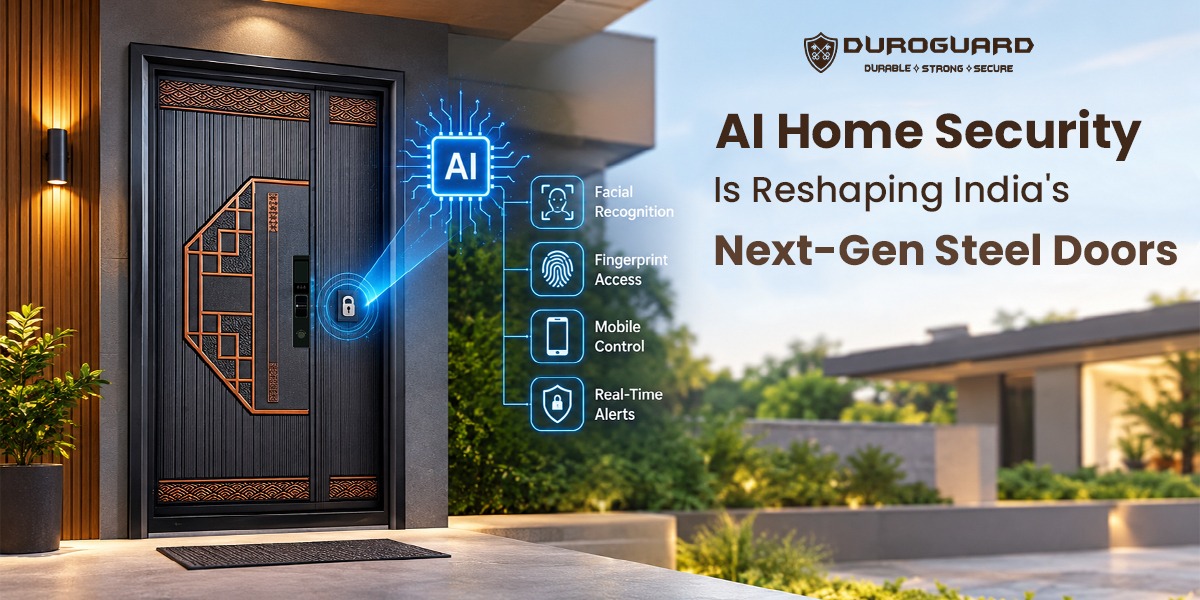
- Smart locks: Fingerprint, PIN, RFID card and app access. Give your house help a time-limited code instead of a duplicate key.
- Access logs and alerts: See who opened the door and when, right from your phone.
- Backup access: A mechanical key or emergency power port, so a dead battery never locks you out.
Important: A smart lock is only as strong as the door it sits on. Check that the door is built for smart locks, not just drilled to fit one.
5. Finishes That Look Like Wood, Last Like Steel
This is where steel doors have changed the most in recent years.
- Digital heat-transfer printing: Real teak, walnut or oak grain printed onto coated steel. Up close, most guests can't tell.
- 3D embossed panels: Classic and contemporary patterns with real depth.
- Design add-ons: Glass inserts, brass or matte black accents, designer pull handles and matching safety grills.
No yearly polishing. No swelling in the rains. No faded colour after two summers.
How to Spot a Well-Engineered Steel Door
Take this checklist to any door showroom.
- Is the sheet galvanised, or only painted?
- What is the steel thickness and zinc coating?
- Is it powder coated? The finish should feel smooth and even, edges included.
- What's inside the shutter: honeycomb, PUF, rock wool or nothing?
- How many locking points does it have?
- Is it smart lock ready from the factory?
- Are there rubber gaskets around the frame?
- What does the warranty cover, and is there service in your city?
- Close the door. It should land with a solid thud, not a rattle.
Built for Indian homes. Tested by Indian weather.
Duroguard started with a simple belief: a steel door should protect your family without making your home look like a warehouse. That's why people know it as India's Trusted Steel Doors, with 70+ showrooms across South India and 50,000+ homes installed.
Wood-finish designs, smart lock-ready models and doors made for coastal humidity and monsoon rain. Every point on the checklist above is something you can ask a Duroguard expert, face to face.
Visit your nearest Duroguard showroom. Touch the finish, knock on the shutter, turn the lock. Then decide.
Frequently Asked Questions
Everything you need to know about this topic

Comments